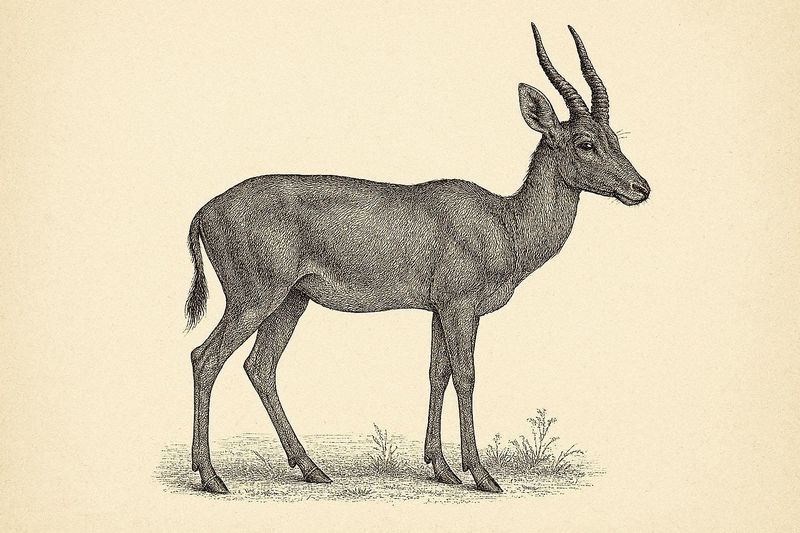
Antelope
Nutritional information per 100 grams
Nutrition Facts
| Calories | Protein | Fat | Carbs | Sugar | Fiber |
|---|---|---|---|---|---|
| 150 | 29g | 2g | 0g | 0g | 0g |
Highlights
Coming soon
About This Meat
Antelope is a wild game meat with one of the leanest macronutrient profiles among commonly hunted animals, providing very high protein content relative to total caloric value and minimal intramuscular fat. As a free-ranging ruminant adapted to open grassland environments, antelope accumulates muscle tissue with a fatty acid composition that differs from grain-fed livestock, typically showing higher proportions of omega-3 polyunsaturated fats and conjugated linoleic acid, both of which influence membrane phospholipid composition and metabolic signaling. Antelope is a complete protein source, supplying all essential amino acids in physiologically relevant quantities that support muscle protein synthesis, collagen production, and the ongoing maintenance of structural and functional proteins throughout the body. The heme iron in antelope is highly bioavailable and supports hemoglobin synthesis, myoglobin density in working muscle, and the iron-dependent cytochrome enzymes of the mitochondrial electron transport chain. Zinc is present and participates in immune activation, reproductive hormone production, and the catalytic activity of enzymes governing protein and nucleic acid metabolism. Vitamin B12 is found in meaningful amounts and is indispensable for neurological integrity, DNA synthesis, and the methylation reactions that regulate gene expression and cardiovascular risk factors. Niacin supports NAD-dependent energy metabolism, while phosphorus contributes to both skeletal mineralization and ATP-mediated energy transfer at the cellular level. Selenium is a trace mineral present in antelope that supports thyroid function and antioxidant enzyme systems including glutathione peroxidase. The exceptionally lean nature of antelope makes it one of the highest-efficiency animal protein sources in terms of protein delivered per calorie consumed. Its nutritional profile reflects the ancestral characteristics of wild ruminant meat that formed a significant component of the human dietary environment throughout evolutionary history.
Vitamins & Nutrients
- Cholesterol: 95mg (precursor for sex and adrenal hormones, membrane microdomain scaffolding, lipid-soluble vitamin transport)
- Sodium: 51mg (extracellular osmolality maintenance, sodium channel-mediated depolarization, aldosterone-regulated renal balance)
- Potassium: 353mg (resting membrane electrochemical gradient, striated muscle contraction initiation, carbohydrate enzyme cofactor)
- Iron: 3.2mg (oxygen-carrying hemoglobin iron center, cytochrome electron donation, metabolic heme enzyme support)
- Zinc: 2.5mg (zinc metalloprotein catalysis, adaptive immune cell signaling, testosterone biosynthesis involvement)
- Selenium: 14mcg (glutathione peroxidase and selenoprotein W activity, thyroid deiodination, mitochondrial oxidative protection)
- Vitamin B12: 1.5mcg (methylcobalamin in one-carbon metabolism, Schwann cell myelin maintenance, erythropoietic DNA support)
- Vitamin B1: 0.32mg (thiamine pyrophosphate-dependent enzyme complexes, glucose oxidation pathway, cerebral energy metabolism)
- Riboflavin (B2): 0.58mg (FAD-linked dehydrogenase reactions, beta-oxidation of fatty acids, glutathione reductase support)
- Niacin (B3): 5.5mg (NAD-dependent dehydrogenases in all major metabolic pathways, PARP enzyme activity, mitochondrial bioenergetics)
- Phosphorus: 188mg (phosphate in ATP synthesis, phospholipid bilayer integrity, calcium-phosphate skeletal matrix)
- Potassium: 353mg (electrolyte-driven muscle activation, sodium-potassium exchange pump substrate, renal acid-base handling)
- Magnesium: 22mg (ATP-Mg complex for enzymatic phosphoryl transfer, calcium regulation in muscle, ribosome structural stability)
- Copper: 0.18mg (lysyl oxidase-catalyzed collagen and elastin crosslinking, mitochondrial copper-zinc superoxide dismutase, iron metabolism)
These values are approximate and can vary based on factors such as the specific cut of beef and cooking method.