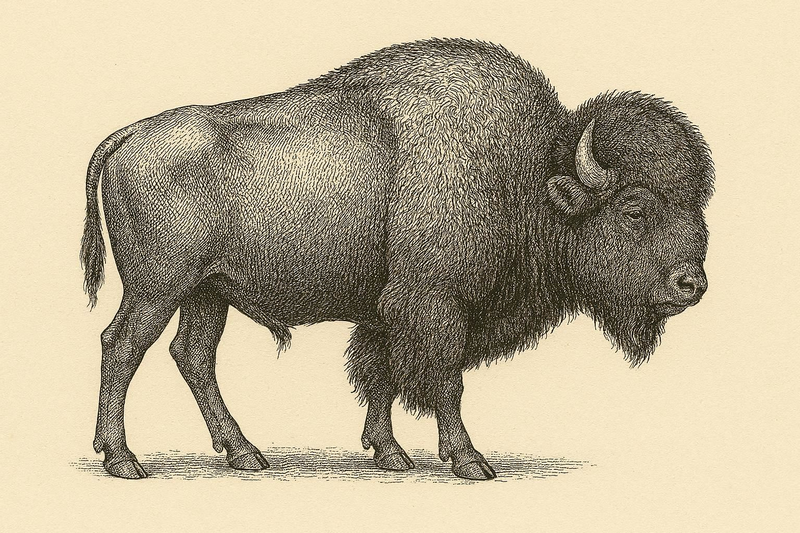
Bison
Nutritional information per 100 grams
Nutrition Facts
| Calories | Protein | Fat | Carbs | Sugar | Fiber |
|---|---|---|---|---|---|
| 143 | 28g | 2g | 0g | 0g | 0g |
Highlights
Coming soon
About This Meat
Bison is a nutritionally dense ruminant meat that shares many characteristics with beef while offering a distinct macronutrient composition. It is notably leaner than most cuts of beef, providing high protein concentrations with a lower total fat content, which alters its caloric density and satiety profile. The protein in bison is complete, delivering all essential amino acids in amounts sufficient to support muscle protein synthesis, tissue repair, and enzymatic function. Despite its lower fat content relative to beef, bison still provides meaningful quantities of fat-soluble nutrients and serves as a viable protein anchor in high-protein dietary protocols. Bison is a strong source of heme iron, contributing significantly to daily requirements for oxygen transport and energy metabolism. It supplies zinc at levels comparable to beef, supporting immune competence, cellular repair, and androgen metabolism. Selenium is present in bison and contributes to antioxidant enzyme systems and thyroid function. B vitamins including B12, niacin, and B6 are well-represented and support mitochondrial energy pathways and nervous system maintenance. Because bison are predominantly pasture-raised, the fatty acid composition tends toward a more favorable omega-3 to omega-6 ratio compared to conventionally grain-finished beef. Conjugated linoleic acid is present in meaningful amounts due to the ruminant nature of the animal and its grass-based diet. The lower intramuscular fat content means bison provides a high protein-to-calorie ratio, making it particularly useful for individuals prioritizing lean mass accrual or managing caloric intake. Creatine and carnosine are present in bison muscle tissue and support anaerobic performance and intracellular buffering capacity. Bison contains phosphorus, which is integral to ATP synthesis, bone mineralization, and acid-base regulation. The micronutrient density relative to caloric load positions bison as a highly efficient protein and mineral source within animal-based nutritional frameworks. Its nutrient bioavailability is high, consistent with other ruminant meats and uncompromised by antinutritional compounds.
Vitamins & Nutrients
- Cholesterol: 62mg (cell membrane structure, steroid hormone precursor, bile acid production)
- Sodium: 57mg (fluid regulation, neural conduction, electrolyte balance)
- Potassium: 361mg (muscle function, cardiovascular electrical activity, intracellular fluid regulation)
- Iron: 3.4mg (oxygen carrier in hemoglobin, red blood cell support, aerobic energy metabolism)
- Zinc: 3.7mg (immune defense, enzymatic catalysis, cellular growth and repair)
- Selenium: 36mcg (antioxidant enzyme support, thyroid hormone conversion, immune modulation)
- Vitamin B12: 2.9mcg (neurological integrity, DNA replication, red blood cell maturation)
- Vitamin B6: 0.4mg (amino acid metabolism, neurotransmitter production, hemoglobin synthesis)
- Niacin (B3): 3.7mg (NAD-dependent cellular energy, metabolic pathway support)
- Riboflavin (B2): 0.27mg (flavoprotein enzyme activity, energy metabolism, cellular redox function)
- Thiamin (B1): 0.1mg (glucose-to-energy conversion, peripheral nerve support)
- Vitamin E: 0.36mg (lipid peroxidation protection, immune cell function)
- Vitamin K: 1.3mcg (clotting factor activation, bone mineralization support)
- Folate: 8mcg (nucleotide synthesis, homocysteine regulation, cellular proliferation)
- Magnesium: 26mg (enzyme cofactor activity, ATP stability, neuromuscular regulation)
- Phosphorus: 209mg (skeletal tissue structure, phospholipid membrane support, energy currency)
- Copper: 0.11mg (red and white blood cell production, collagen cross-linking, iron transport support)
These values are approximate and can vary based on factors such as the specific cut of beef and cooking method.