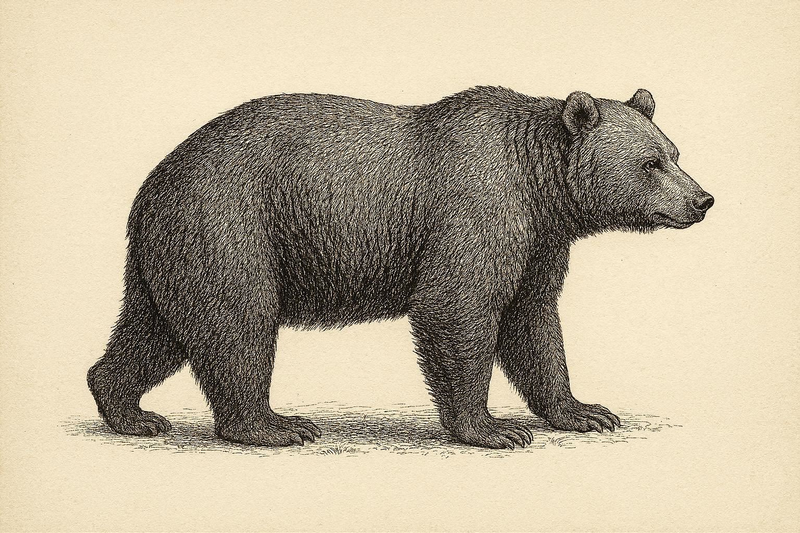
Bear
Nutritional information per 100 grams
Nutrition Facts
| Calories | Protein | Fat | Carbs | Sugar | Fiber |
|---|---|---|---|---|---|
| 260 | 25g | 18g | 0g | 0g | 0g |
Highlights
Coming soon
About This Meat
Bear meat is a nutrient-dense red meat that delivers a robust macronutrient profile, including high protein content and a notable fat component that varies significantly by season and the animal's diet. The fat composition in bear meat tends to reflect its omnivorous foraging, often containing a mix of saturated and monounsaturated fatty acids alongside polyunsaturated fats, particularly when the animal has consumed plant-based foods prior to harvest. Protein content is substantial, supporting muscle protein synthesis, tissue repair, and nitrogen retention. Bear meat is a meaningful source of B vitamins, particularly B12, niacin, and riboflavin, all of which are critical to mitochondrial energy production and red blood cell formation. Iron content is high and primarily in the heme form, which is absorbed with greater efficiency than non-heme iron from plant sources. Zinc is present in meaningful quantities, supporting immune signaling, enzymatic function, and testosterone biosynthesis. Bear fat provides a concentrated caloric source, which is relevant for individuals prioritizing fat-based energy metabolism. Selenium, a trace mineral involved in thyroid hormone conversion and antioxidant enzyme activity, is present in this meat. The complete amino acid profile supports the body's structural and functional protein needs across connective tissue, muscle, and organ systems. Phosphorus and potassium contribute to cellular energy metabolism and electrolyte balance. Bear meat has historically been consumed by indigenous and subsistence populations as a calorically dense, nutrient-complete food during periods requiring high energy output. The varying fat content across seasons makes it a food with distinct metabolic implications depending on harvest time. Overall, bear meat represents a complete animal protein source with considerable micronutrient breadth suited to a nutrient-dense, animal-based dietary framework.
Vitamins & Nutrients
- Cholesterol: 90mg (hormone synthesis, cellular membrane integrity, steroid production)
- Sodium: 71mg (fluid balance, nerve impulse transmission, muscle contraction)
- Potassium: 263mg (electrolyte regulation, cardiovascular function, muscular contraction)
- Iron: 8.7mg (oxygen transport via hemoglobin, red blood cell production, metabolic energy)
- Zinc: 10.3mg (immune signaling, testosterone support, tissue regeneration)
- Copper: 0.15mg (iron metabolism, connective tissue formation, enzymatic antioxidant activity)
- Selenium: 9.8mcg (glutathione peroxidase activity, thyroid hormone metabolism, cellular protection)
- Magnesium: 23mg (ATP synthesis, neuromuscular function, enzymatic co-factor activity)
- Phosphorus: 160mg (bone mineral structure, ATP energy production, cellular repair)
- Vitamin B1 (Thiamin): 0.1mg (carbohydrate metabolism, nervous system energy support)
- Vitamin B2 (Riboflavin): 0.82mg (cellular energy production, fatty acid oxidation, growth support)
- Niacin (B3): 3.4mg (NAD-dependent energy metabolism, nervous system function)
- Vitamin B6: 0.29mg (amino acid metabolism, neurotransmitter biosynthesis)
- Vitamin B12: 2.5mcg (neurological integrity, DNA synthesis, red blood cell formation)
- Folate: 6mcg (cell division support, DNA replication, nucleotide synthesis)
- Vitamin E: 0.49mg (lipid peroxidation protection, cellular membrane integrity)
- Vitamin K: 1.8mcg (coagulation cascade support, bone protein activation)
These values are approximate and can vary based on factors such as the specific cut of beef and cooking method.