Crayfish
Nutritional information per 100 grams
Nutrition Facts
| Calories | Protein | Fat | Carbs | Sugar | Fiber |
|---|---|---|---|---|---|
| 82 | 17g | 1g | 0g | 0g | 0g |
Highlights
Coming soon
About This Meat
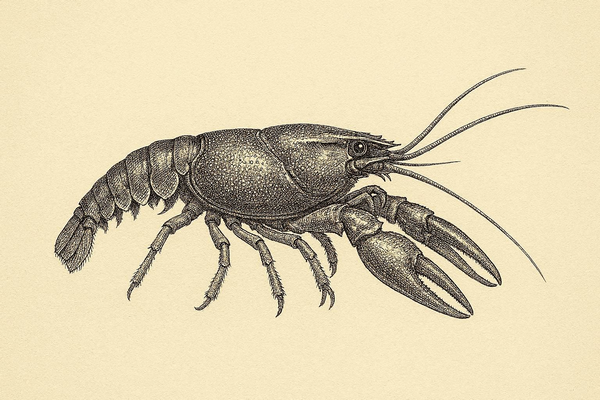
Crayfish are freshwater crustaceans that provide lean, complete protein with a low fat content and a distinctive micronutrient profile that reflects their aquatic environment. They are a solid source of vitamin B12, supporting neurological function and red blood cell synthesis. Crayfish supply copper and zinc, both of which are involved in enzymatic reactions, immune regulation, and connective tissue integrity. Their selenium content supports antioxidant defense systems and thyroid hormone activation. Phosphorus is present at levels that contribute to ATP synthesis, skeletal mineralization, and cellular energy transport. Crayfish provide niacin and riboflavin, both B vitamins that participate in the electron transport chain and macronutrient catabolism. The amino acid profile of crayfish protein is complete, making it biologically effective for muscle maintenance and tissue turnover. Iron is found in crayfish and is delivered in a form more bioavailable than iron from plant sources, supporting oxygen transport and mitochondrial function. Crayfish contain modest amounts of omega-3 fatty acids, contributing to cell membrane composition and systemic signaling. Magnesium is present, supporting over 300 enzymatic processes including glucose metabolism and protein synthesis. As a low-calorie, high-protein food with a broad micronutrient base, crayfish align well with carnivore dietary principles emphasizing nutrient density per calorie.
Vitamins & Nutrients
- Cholesterol: 116mg (involved in steroid hormone production, cellular membrane structure, and bile synthesis)
- Sodium: 94mg (supports fluid balance, nerve impulse conduction, and muscle contraction)
- Potassium: 296mg (contributes to electrolyte balance, muscular function, and cardiovascular support)
- Phosphorus: 270mg (involved in ATP energy production, bone mineralization, and cellular repair)
- Magnesium: 33mg (supports muscle function, ATP synthesis, and nervous system regulation)
- Calcium: 60mg (helps maintain bone structure, nerve signaling, and muscle contraction)
- Iron: 0.83mg (supports oxygen transport in red blood cells and metabolic energy production)
- Zinc: 1.8mg (involved in immune signaling, enzyme activity, and tissue repair)
- Copper: 0.69mg (contributes to red blood cell formation, iron utilization, and connective tissue synthesis)
- Manganese: 0.52mg (supports enzymatic reactions, bone metabolism, and carbohydrate processing)
- Selenium: 37mcg (contributes to thyroid hormone metabolism and antioxidant enzyme function)
- Vitamin B12: 2.2mcg (supports neurological function, DNA synthesis, and red blood cell formation)
- Vitamin B6: 0.08mg (involved in protein metabolism and neurotransmitter production)
- Niacin (B3): 2.3mg (contributes to cellular energy metabolism and nervous system support)
- Pantothenic Acid (B5): 0.58mg (involved in fat metabolism and adrenal hormone synthesis)
- Folate (B9): 44mcg (supports DNA synthesis, cell division, and red blood cell maturation)
- Vitamin E: 1.5mg (involved in antioxidant protection and cellular membrane integrity)
- Astaxanthin: trace amounts (a marine carotenoid that contributes to antioxidant activity and cellular protection)
These values are approximate and can vary based on factors such as the specific cut of beef and cooking method.