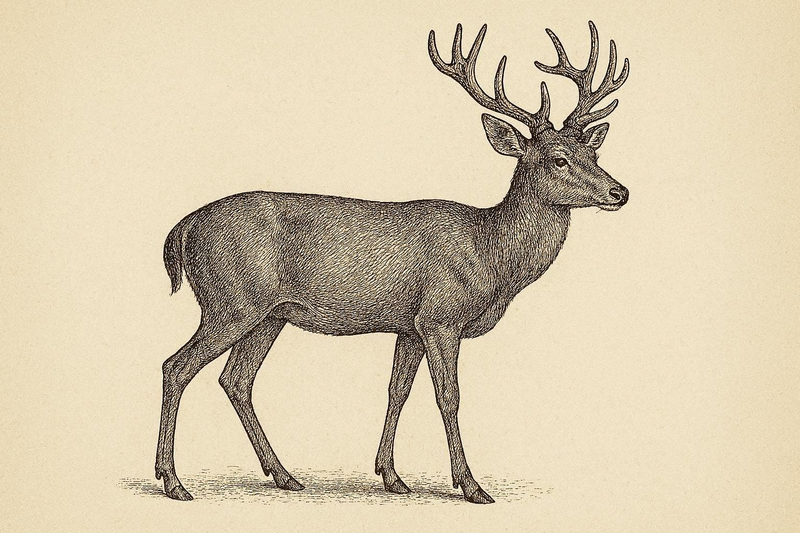
Deer
Nutritional information per 100 grams
Nutrition Facts
| Calories | Protein | Fat | Carbs | Sugar | Fiber |
|---|---|---|---|---|---|
| 158 | 30g | 3g | 0g | 0g | 0g |
Highlights
Coming soon
About This Meat
Deer, or venison, is a widely consumed wild game meat known for its exceptionally lean profile and high protein density relative to its caloric content. The macronutrient composition of deer is characterized by very low total fat and high protein, with the lean muscle providing a concentrated source of complete amino acids that support muscle maintenance, immune protein synthesis, and systemic tissue repair. The fat present in venison tends to reflect the animal's wild diet, containing a more balanced omega-6 to omega-3 polyunsaturated fatty acid ratio compared to grain-finished domesticated meat, which has implications for the phospholipid composition of cell membranes and eicosanoid signaling. Heme iron is abundant in venison and is absorbed at rates far exceeding non-heme iron, making deer a valuable food for supporting iron status, hemoglobin synthesis, and aerobic energy metabolism. Zinc content is significant and supports immune function, testosterone synthesis, DNA replication fidelity, and the activity of antioxidant superoxide dismutase enzymes. Vitamin B12 is present in concentrations that meaningfully support neurological health, red blood cell maturation, and methionine cycle function. Niacin and riboflavin contribute to mitochondrial energy production as components of NAD and FAD coenzyme systems respectively. Phosphorus supports bone matrix formation, acid-base homeostasis, and the energetic phosphorylation reactions that underpin all biosynthetic cellular work. Venison also provides selenium, which supports thyroid hormone deiodination and the glutathione peroxidase antioxidant system. The lean, nutrient-dense character of deer makes it a highly efficient protein source for supporting body composition, metabolic health, and broad micronutrient needs without delivering excessive caloric load from fat.
Vitamins & Nutrients
- Cholesterol: 91mg (adrenal and reproductive steroid hormone production, lipid bilayer structural integrity, bile synthesis)
- Sodium: 57mg (extracellular fluid compartment balance, voltage-gated ion channel function, kidney reabsorption regulation)
- Potassium: 434mg (myocardial repolarization, intracellular enzyme cofactor function, acid-base buffer contribution)
- Iron: 4.3mg (heme iron transport in erythrocytes, non-heme iron in enzyme catalysis, mitochondrial respiratory efficiency)
- Zinc: 4.0mg (zinc-dependent immune regulation, matrix metalloprotease activity, spermatogenesis and hormonal support)
- Selenium: 11mcg (selenoprotein biosynthesis, cellular redox homeostasis, thyroid hormone activation)
- Vitamin B12: 3.6mcg (cobalamin-catalyzed methyl transfer, neuronal axon myelination, red blood cell nucleic acid synthesis)
- Vitamin B6: 0.61mg (pyridoxamine phosphate interconversion, tryptophan catabolism, erythrocyte aminotransferase activity)
- Niacin (B3): 8.8mg (NAD-dependent oxidation of metabolic substrates, NADP in anabolic biosynthesis, cellular energy conservation)
- Riboflavin (B2): 0.56mg (FAD and FMN coenzyme roles in beta-oxidation, electron transport flavoproteins, cellular growth)
- Pantothenic Acid (B5): 0.86mg (pantetheine in fatty acid synthase, coenzyme A in TCA cycle entry, gluconeogenesis support)
- Thiamin (B1): 0.26mg (thiamine pyrophosphate in pyruvate oxidation, TCA cycle flux, nerve impulse energy support)
- Copper: 0.25mg (cytochrome c oxidase electron transfer, ceruloplasmin-mediated iron transport, connective tissue enzyme activity)
- Phosphorus: 299mg (bone and tooth mineral content, ATP phosphoryl transfer, intracellular signaling via phospholipase)
- Magnesium: 33mg (intracellular magnesium-nucleotide complex stability, neuromuscular junction regulation, bone magnesium reservoir)
- CoQ10: (ubiquinone role in mitochondrial electron transport, ATP production efficiency, fat-soluble antioxidant activity)
These values are approximate and can vary based on factors such as the specific cut of beef and cooking method.