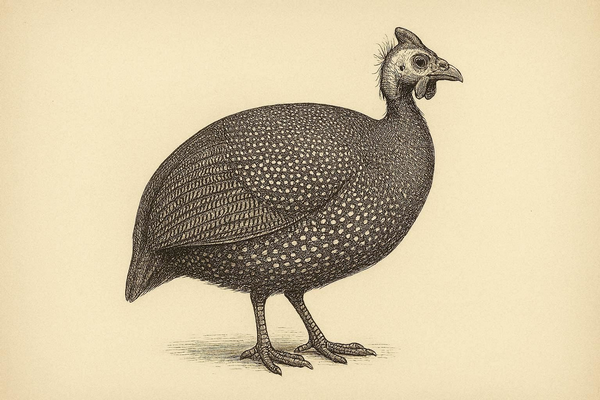
Guinea Fowl
Nutritional information per 100 grams
Nutrition Facts
| Calories | Protein | Fat | Carbs | Sugar | Fiber |
|---|---|---|---|---|---|
| 134 | 27g | 2g | 0g | 0g | 0g |
Highlights
Coming soon
About This Meat
Guinea fowl is a nutrient-dense poultry species that offers a leaner protein profile compared to conventional chicken, with a higher proportion of muscle meat relative to fat. The macronutrient composition is primarily protein-dominant, supporting muscle protein synthesis, nitrogen balance, and satiety through sustained amino acid availability. Guinea fowl provides a complete amino acid profile including high concentrations of leucine, isoleucine, and valine, the branched-chain amino acids most directly involved in skeletal muscle repair and anabolic signaling. B vitamins are well-represented, particularly niacin (B3), which plays a central role in NAD+ production and cellular energy metabolism. Vitamin B6 is present in meaningful amounts and supports amino acid transamination, neurotransmitter synthesis, and glycogen metabolism. B12 content supports neurological function and red blood cell maturation. Zinc and phosphorus contribute to enzymatic activity, bone health, and ATP synthesis pathways. Selenium in guinea fowl supports antioxidant enzyme systems and thyroid hormone conversion from T4 to T3. Iron content, particularly in the darker muscle tissue, supports oxygen delivery through hemoglobin and myoglobin. The fat composition includes both saturated and monounsaturated fatty acids that contribute to fat-soluble vitamin absorption and cell membrane fluidity. Choline, present in the muscle tissue, supports phospholipid synthesis, liver fat metabolism, and acetylcholine production for neuromuscular function. Guinea fowl represents a high-bioavailability protein source with a broad micronutrient profile well-suited to metabolic and physiological support.
Vitamins & Nutrients
- Cholesterol: 74mg (steroid hormone precursor, cellular membrane integrity)
- Sodium: 67mg (fluid balance, nerve conduction, electrolyte regulation)
- Potassium: 193mg (muscle function, cardiovascular support, intracellular fluid balance)
- Iron: 2.8mg (hemoglobin formation, oxygen transport, enzymatic energy metabolism)
- Phosphorus: 226mg (ATP synthesis, bone tissue structure, acid-base regulation)
- Calcium: 13mg (neuromuscular signaling, skeletal support, intracellular messaging)
- Magnesium: 23mg (ATP production, muscle relaxation, nervous system regulation)
- Zinc: 1.1mg (immune function, tissue repair, hormonal signaling)
- Selenium: 17.5mcg (antioxidant defense, thyroid hormone metabolism, immune support)
- Vitamin B12: 0.4mcg (neurological function, DNA synthesis, red blood cell production)
- Vitamin B6: 0.53mg (amino acid metabolism, neurotransmitter production, protein utilization)
- Vitamin B3 (Niacin): 7mg (NAD coenzyme production, cellular energy metabolism, nervous system support)
- Vitamin B5 (Pantothenic Acid): 0.93mg (coenzyme A synthesis, fat oxidation, adrenal hormone production)
- Vitamin A: 28mcg (visual function, immune tissue maintenance, epithelial integrity)
These values are approximate and can vary based on factors such as the specific cut of beef and cooking method.