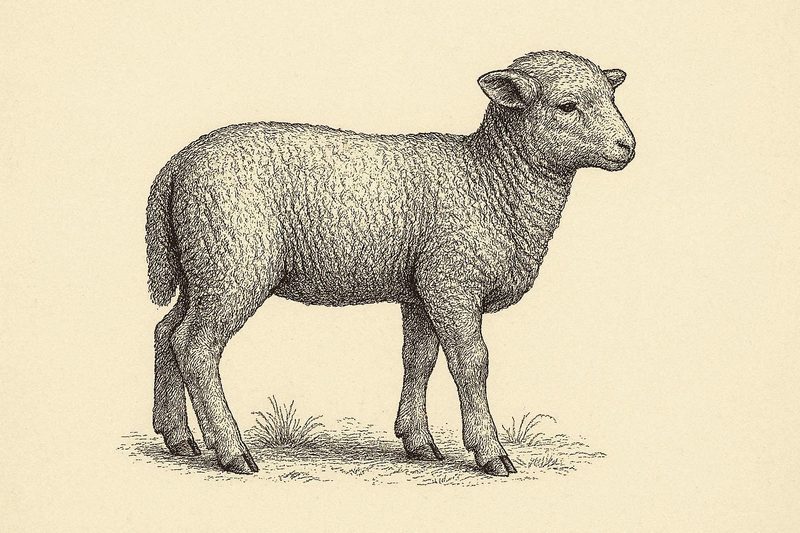
Lamb
Nutritional information per 100 grams
Nutrition Facts
| Calories | Protein | Fat | Carbs | Sugar | Fiber |
|---|---|---|---|---|---|
| 282 | 25g | 21g | 0g | 0g | 0g |
Highlights
Coming soon
About This Meat
Lamb is the meat of young sheep, typically under one year of age, and is distinguished by a macronutrient profile that balances substantial protein with moderate fat across a range of cuts. The protein content is complete, supplying all essential amino acids in proportions that directly support skeletal muscle maintenance, immune function, connective tissue production, and enzymatic activity throughout the body. Lamb fat contains a notably favorable fatty acid composition, including oleic acid, conjugated linoleic acid, and a range of saturated fatty acids, the majority of which are metabolically neutral or supportive within the context of a low-carbohydrate diet. Heme iron is present at high concentrations in lamb, contributing meaningfully to daily requirements and supporting hemoglobin production, oxygen delivery, and cytochrome-dependent energy production in the mitochondria. Zinc in lamb is abundant and bioavailable, functioning as a cofactor for hundreds of enzymatic reactions involved in protein metabolism, immune defense, DNA repair, and reproductive hormone regulation. Vitamin B12 is well-represented and supports the neurological system, methylation pathways, and the maturation of erythrocytes. Niacin is present at meaningful levels and serves as a precursor to NAD, a molecule central to cellular redox reactions and mitochondrial respiration. Riboflavin supports FAD-dependent metabolism of fatty acids and amino acids within the mitochondrial matrix. Selenium is supplied in sufficient quantities to support glutathione peroxidase activity and the conversion of thyroxine to active triiodothyronine. Phosphorus contributes to ATP synthesis, bone density, and the structural integrity of cellular membranes through its role in phospholipids. Vitamin D is found in lamb fat and supports calcium absorption, immune modulation, and musculoskeletal health. Creatine and carnosine are present in lamb muscle tissue and contribute to anaerobic energy capacity and intracellular antioxidant activity respectively. The high bioavailability of lamb's micronutrients, combined with the absence of antinutritional factors, positions it as a highly efficient source of nutrient delivery within animal-based dietary frameworks.
Vitamins & Nutrients
- Cholesterol: 97mg (steroid hormone substrate, brain membrane structural role, fat-soluble vitamin transport)
- Sodium: 72mg (plasma osmolarity, nerve depolarization, fluid compartment regulation)
- Potassium: 300mg (resting membrane potential, cardiovascular rhythm, muscle relaxation support)
- Iron: 2.3mg (heme iron in hemoglobin, oxygen delivery, myoglobin oxygen storage in skeletal muscle)
- Zinc: 4.5mg (immune defense cell maturation, reproductive hormone synthesis, tissue regeneration)
- Selenium: 9.4mcg (antioxidant selenoprotein production, thyroid hormone deiodination, sperm motility support)
- Vitamin B12: 2.6mcg (DNA synthesis, neurological integrity, erythropoiesis)
- Vitamin B6: 0.4mg (amino acid catabolism, serotonin and norepinephrine biosynthesis, immune function)
- Niacin (B3): 6.3mg (NAD-dependent metabolic reactions, cellular energy transfer, skin and nerve health)
- Riboflavin (B2): 0.23mg (electron carrier in mitochondrial complexes, cellular metabolism, growth support)
- Thiamin (B1): 0.1mg (glucose metabolism initiation, neural membrane function, acetylcholine precursor support)
- Pantothenic Acid (B5): 0.7mg (coenzyme A synthesis, adrenal cortex hormone support, fatty acid metabolism)
- Vitamin E: 0.5mg (lipid peroxidation prevention, immune cellular integrity, membrane antioxidant defense)
- Magnesium: 22mg (ATP synthase cofactor, muscle tone regulation, neurotransmitter release modulation)
- Phosphorus: 188mg (bone and dental matrix structure, phospholipid bilayer, energy transfer via phosphate groups)
- CLA (Conjugated Linoleic Acid): 150mg (metabolic fat regulation, body composition support, cellular signaling activity)
These values are approximate and can vary based on factors such as the specific cut of beef and cooking method.