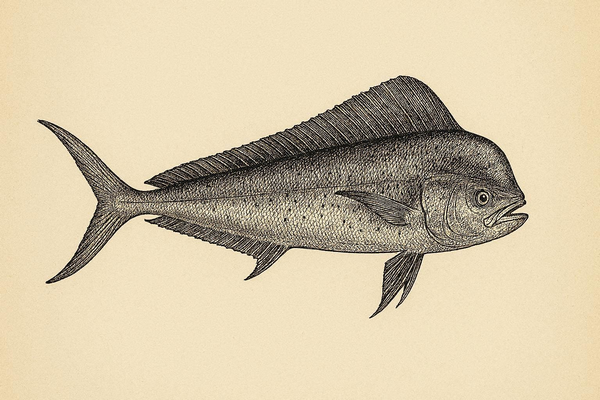
Mahi Mahi
Nutritional information per 100 grams
Nutrition Facts
| Calories | Protein | Fat | Carbs | Sugar | Fiber |
|---|---|---|---|---|---|
| 134 | 24g | 3g | 0g | 0g | 0g |
Highlights
Coming soon
About This Meat
Mahi Mahi is a lean, firm-fleshed ocean fish offering a high protein yield with a low fat profile, making it a highly efficient source of bioavailable complete protein. Its amino acid composition supports muscle protein synthesis, tissue repair, and the production of structural and functional proteins throughout the body. The low fat content of Mahi Mahi makes it a calorie-efficient protein source that contributes to satiety through protein-mediated appetite suppression via hormonal signals including GLP-1 and PYY. Niacin (B3) is one of Mahi Mahi's most notable micronutrient contributions, supporting NAD+ biosynthesis, which drives mitochondrial energy production and DNA repair mechanisms. Vitamin B12 is present in bioavailable form, supporting myelination of nerve fibers, red blood cell maturation, and one-carbon metabolism. Phosphorus content contributes to skeletal mineralization and participates in phosphorylation reactions central to ATP production and cellular signaling. Selenium in Mahi Mahi supports selenoprotein synthesis, including enzymes involved in thyroid hormone conversion and oxidative stress management. Potassium is present at levels that support intracellular fluid balance, electrical conductivity in neurons and muscle cells, and cardiovascular function. The fish provides meaningful amounts of B6 (pyridoxine), which functions as a coenzyme in over 100 enzymatic reactions including amino acid transamination and neurotransmitter synthesis. Iron content, while lower than red meats, contributes to hemoglobin and myoglobin production in a heme form with favorable intestinal absorption rates. Mahi Mahi provides a modest omega-3 contribution, including EPA and DHA, that supports membrane phospholipid composition and inflammatory regulation. Its overall profile makes it a useful lean protein within a carnivore or animal-based framework for those managing fat intake while maintaining nutrient density.
Vitamins & Nutrients
- Cholesterol: 73mg (supports hormone synthesis, cellular membrane structure, and fat-soluble vitamin absorption)
- Sodium: 88mg (contributes to fluid regulation, nerve conduction, and muscle contraction)
- Potassium: 416mg (supports electrolyte balance, cardiovascular function, and muscular activity)
- Selenium: 37mcg (involved in antioxidant enzyme activity, thyroid hormone metabolism, and immune defense)
- Phosphorus: 143mg (contributes to bone mineralization, ATP production, and cellular repair)
- Magnesium: 30mg (supports muscle function, ATP synthesis, and nervous system regulation)
- Iron: 1.1mg (involved in oxygen transport, red blood cell production, and metabolic energy)
- Zinc: 0.46mg (contributes to immune signaling, enzyme activity, and tissue repair)
- Niacin (B3): 6.1mg (involved in cellular energy metabolism and NAD production)
- Vitamin B6: 0.4mg (supports protein metabolism, neurotransmitter production, and amino acid processing)
- Riboflavin (B2): 0.1mg (contributes to energy production and cellular growth)
- Pantothenic Acid (B5): 0.8mg (involved in fat metabolism and hormone synthesis)
- Vitamin B12: 0.6mcg (supports neurological function, DNA synthesis, and red blood cell formation)
- Vitamin A: 180 IU (contributes to immune function, vision, and epithelial tissue maintenance)
- Thiamin (B1): 0.02mg (involved in carbohydrate metabolism and nervous system support)
- Folate (B9): 5mcg (supports DNA synthesis and cell division)
- Omega-3 fatty acids (EPA+DHA): 0.22g (contribute to cardiovascular function and cellular membrane integrity)
These values are approximate and can vary based on factors such as the specific cut of beef and cooking method.