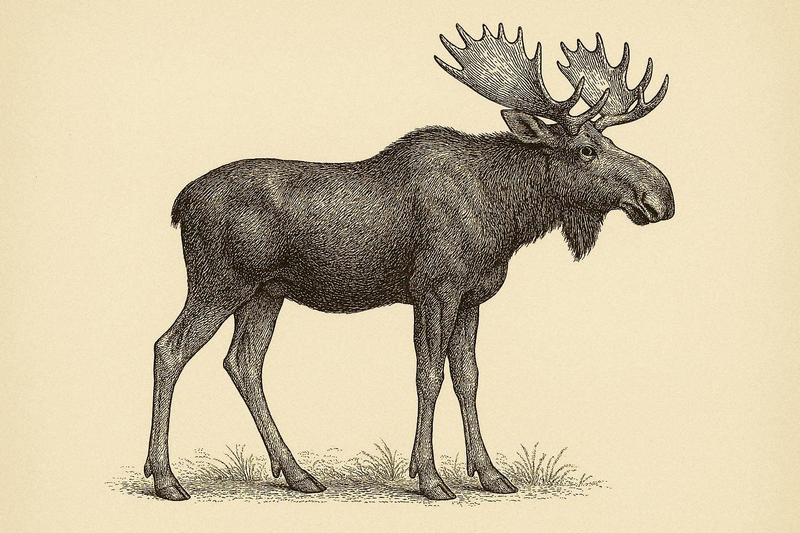
Moose
Nutritional information per 100 grams
Nutrition Facts
| Calories | Protein | Fat | Carbs | Sugar | Fiber |
|---|---|---|---|---|---|
| 120 | 28g | 1g | 0g | 0g | 0g |
Highlights
Coming soon
About This Meat
Moose meat is among the most nutritionally distinguished large wild game proteins, offering an exceptional combination of very high protein content and extremely low fat levels relative to domestic ruminants. The lean musculature of moose reflects the animal's large body mass, cold-climate adaptation, and high daily locomotion, resulting in dense, myoglobin-rich muscle tissue. Protein content is very high, supporting superior muscle protein synthesis potential, satiety, and metabolic rate through a robust thermic effect. The fat content is low, with the majority of lipid being structural rather than intramuscular, and the fatty acid composition of moose fat leans toward a favorable ratio of omega-3 to omega-6 relative to grain-fed domestic beef. B12 is highly concentrated in moose muscle and supports DNA synthesis, neurological function, and methionine metabolism. Niacin, riboflavin, and B6 are well-represented and collectively support the full scope of mitochondrial energy production. Heme iron concentration is particularly high in moose, reflecting the oxygen demands of large-bodied cold-climate musculature, and bioavailability is superior to all non-heme iron sources. Zinc is present at levels that robustly support anabolic hormone production, immune defense, and enzymatic catalysis. Selenium concentration is consistent with northern wild game and supports antioxidant defense and thyroid function. Phosphorus and potassium are present at levels supporting ATP synthesis and electrolyte balance. Moose organ meats, particularly liver and kidney, concentrate fat-soluble vitamins A, D, K2, and B vitamins at levels that substantially exceed muscle meat. Moose has served as a critical winter protein and caloric resource for Arctic and subarctic indigenous populations across millennia. Its combination of ultra-lean protein with a complete micronutrient profile makes it one of the most nutritionally efficient wild game proteins available within a carnivore or animal-based dietary framework.
Vitamins & Nutrients
- Cholesterol: 80mg (steroid hormone precursor activity, bile acid production, cell membrane structure)
- Sodium: 69mg (fluid osmolarity regulation, nerve conduction, electrolyte balance)
- Potassium: 334mg (cardiovascular electrical stability, intracellular cation function, muscle contraction)
- Iron: 4.2mg (hemoglobin formation, oxygen delivery to tissues, mitochondrial respiration)
- Zinc: 3.7mg (immune cell proliferation, testosterone biosynthesis, protein and DNA synthesis)
- Copper: 0.08mg (iron utilization, collagen fiber formation, antioxidant enzyme activity)
- Selenium: 13mcg (selenoprotein antioxidant defense, thyroid deiodinase function, immune support)
- Magnesium: 24mg (ATP synthesis, muscle contraction and relaxation, neurological regulation)
- Phosphorus: 176mg (bone and dental mineralization, energy transfer, phospholipid membrane structure)
- Vitamin C: 5mg (collagen biosynthesis, non-heme iron absorption enhancement, immune cell support)
- Vitamin B1 (Thiamin): 0.05mg (thiamine pyrophosphate energy metabolism, carbohydrate catabolism)
- Vitamin B2 (Riboflavin): 0.34mg (cellular energy production, FAD coenzyme activity)
- Niacin (B3): 5.3mg (NAD and NADP coenzyme synthesis, cellular fuel oxidation)
- Vitamin B6: 0.37mg (aminotransferase reactions, neurotransmitter biosynthesis, glycogen metabolism)
- Vitamin B12: 6.3mcg (myelin sheath maintenance, one-carbon metabolism, erythropoiesis support)
- Folate: 4mcg (DNA synthesis, methylation cycle support, cellular replication)
- Vitamin E: 0.2mg (lipid antioxidant protection, membrane stability)
- Vitamin K: 1.2mcg (coagulation protein carboxylation, bone matrix protein activation)
These values are approximate and can vary based on factors such as the specific cut of beef and cooking method.