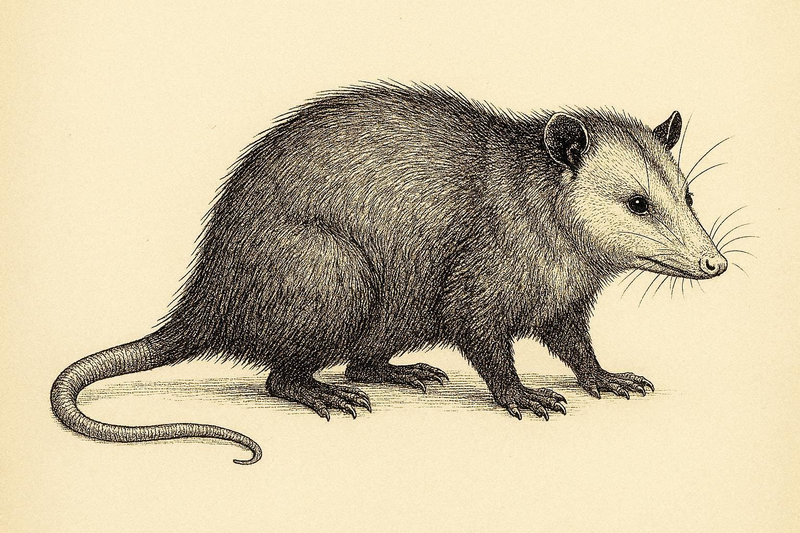
Opossum
Nutritional information per 100 grams
Nutrition Facts
| Calories | Protein | Fat | Carbs | Sugar | Fiber |
|---|---|---|---|---|---|
| 250 | 25g | 18g | 0g | 0g | 0g |
Highlights
Coming soon
About This Meat
Opossum is a small omnivorous marsupial whose meat provides a complete animal protein alongside a moderate fat content that reflects its opportunistic diet and foraging habits. Protein content is sufficient to support tissue repair, anabolism, and nitrogen retention through a complete essential amino acid profile. Fat levels in opossum meat are moderate and can shift based on diet and season, with some degree of polyunsaturated fatty acid contribution. B vitamins support mitochondrial function and energy metabolism, including thiamine, riboflavin, niacin, and B12. Heme iron contributes to oxygen transport and is highly bioavailable relative to dietary iron from plant sources. Zinc is present and supports cellular division, testosterone regulation, and immune defense. Selenium contributes to antioxidant enzyme systems and thyroid hormone metabolism. Taurine and carnitine, found in animal muscle tissue broadly, support fat oxidation, cardiac function, and neurological stability. Opossum contains glycine-rich connective tissue when prepared whole, which supports collagen production and gut barrier integrity. Potassium and phosphorus support electrolyte function and energy currency through ATP metabolism. Opossum has been consumed as a traditional food source in parts of the American South and in various Central and South American food cultures for centuries. Its nutrient profile, while modest compared to larger ruminants, is complete and bioavailable. The lean-to-moderate fat ratio and high protein content make it consistent with the macronutrient structure prioritized in carnivore and animal-based nutritional frameworks. It represents a viable nutrient-dense protein source within a whole-animal dietary approach.
Vitamins & Nutrients
- Cholesterol: 95mg (steroid precursor function, bile acid synthesis, membrane lipid composition)
- Sodium: 58mg (osmotic pressure regulation, action potential initiation, fluid compartment balance)
- Potassium: 438mg (intracellular cation balance, cardiac rhythm, skeletal muscle contraction)
- Iron: 4.6mg (erythropoietic support, oxygen transport, mitochondrial respiratory chain)
- Zinc: 2.3mg (immune cell signaling, wound healing mediation, reproductive hormone support)
- Copper: 0.19mg (lysyl oxidase connective tissue activity, antioxidant enzyme function)
- Selenium: 18.2mcg (selenoprotein production, thyroid hormone regulation, oxidative stress protection)
- Magnesium: 34mg (ATP hydrolysis, nervous system inhibitory signaling, muscle relaxation)
- Phosphorus: 278mg (phospholipid cell membrane structure, bone tissue mineralization, energy metabolism)
- Calcium: 17mg (intracellular second messenger function, muscle fiber contraction, bone matrix)
- Niacin (B3): 3.8mg (cellular redox coenzyme synthesis, metabolic substrate oxidation)
- Vitamin B2 (Riboflavin): 0.25mg (energy production via electron transport, cellular growth processes)
- Vitamin B6: 0.35mg (protein catabolism support, neurotransmitter biosynthesis, glycogen phosphorylase activation)
- Vitamin B12: 4.0mcg (neurological signaling, one-carbon metabolism, DNA synthesis)
- Pantothenic Acid (B5): 0.75mg (acyl carrier protein function, fatty acid elongation, adrenal support)
These values are approximate and can vary based on factors such as the specific cut of beef and cooking method.