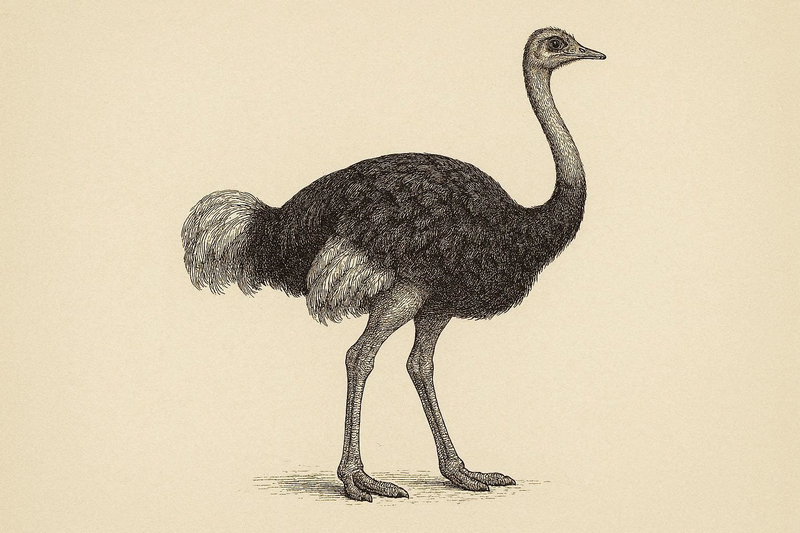
Ostrich
Nutritional information per 100 grams
Nutrition Facts
| Calories | Protein | Fat | Carbs | Sugar | Fiber |
|---|---|---|---|---|---|
| 176 | 26g | 8g | 0g | 0g | 0g |
Highlights
Coming soon
About This Meat
Ostrich meat is a red-meat poultry protein that is nutritionally classified closer to lean red meat than conventional poultry, with a deep red color reflecting high myoglobin density and an iron-rich muscle profile. Protein content is high, with a complete essential amino acid profile that supports muscle protein synthesis, immune protein production, and metabolic enzyme biosynthesis. Fat content is low relative to beef and pork, while the fatty acid composition features a meaningful proportion of polyunsaturated fatty acids including linoleic acid and a moderate omega-3 contribution that distinguishes it from conventional grain-finished domestic meats. B12 concentration is notably high, supporting neurological function, red blood cell maturation, and methylation cycle activity. Niacin and riboflavin are well-represented, contributing to NAD and FAD cofactor pools essential to oxidative phosphorylation. Heme iron is present at concentrations comparable to beef, making ostrich one of the few poultry-category animals with iron density characteristic of red meat. Zinc supports testosterone synthesis, immune cell activation, and hundreds of metalloenzyme reactions. Selenium is present at levels supporting glutathione peroxidase activity and iodothyronine deiodinase function in the thyroid axis. Potassium and phosphorus are abundant, supporting electrolyte homeostasis and high-energy phosphate metabolism. The low fat, high protein ratio of ostrich meat produces a strong satiety signal relative to caloric load. Taurine and carnitine are present in muscle tissue and support mitochondrial fat oxidation and cardiovascular function. Ostrich has been farmed commercially and consumed in Southern Africa, Europe, and increasingly in North America as a nutrient-dense red-meat alternative. Its combination of red-meat iron density, lean macronutrient profile, and complete micronutrient breadth makes it a highly relevant protein within a nutrient-dense, animal-based dietary approach.
Vitamins & Nutrients
- Cholesterol: 71mg (steroid hormone synthesis, bile acid formation, cellular membrane composition)
- Sodium: 80mg (fluid homeostasis, action potential generation, kidney filtration balance)
- Potassium: 362mg (cardiac rhythm regulation, skeletal muscle excitability, intracellular osmolarity)
- Iron: 2.8mg (heme oxygen transport, erythropoiesis, cytochrome respiratory activity)
- Zinc: 4.9mg (immune signaling, testosterone production support, wound tissue regeneration)
- Copper: 0.15mg (ceruloplasmin function, iron oxidation, lysyl oxidase connective tissue activity)
- Selenium: 38mcg (selenoprotein biosynthesis, thyroid hormone conversion, antioxidant enzyme activation)
- Magnesium: 25mg (ATP co-factor activity, muscle and nerve regulation, protein synthesis)
- Phosphorus: 251mg (bone matrix mineralization, energy metabolism via phosphate bonds, cell membrane structure)
- Vitamin B1 (Thiamin): 0.2mg (pyruvate dehydrogenase support, carbohydrate energy release)
- Vitamin B2 (Riboflavin): 0.3mg (FAD and FMN coenzyme function, oxidative energy metabolism)
- Niacin (B3): 5.0mg (NAD biosynthesis, cellular fuel oxidation, DNA repair cofactor)
- Pantothenic Acid (B5): 1.0mg (coenzyme A synthesis, fatty acid metabolism, adrenal hormone production)
- Vitamin B6: 1.0mg (transamination, serotonin and dopamine precursor formation, glycogen phosphorylase activation)
- Vitamin B12: 5.0mcg (neurological function, methionine cycle support, red blood cell maturation)
- Folate: 8mcg (nucleotide synthesis, methylation reactions, cell division support)
- Vitamin E: 0.2mg (membrane lipid antioxidant protection, fat-soluble radical defense)
These values are approximate and can vary based on factors such as the specific cut of beef and cooking method.