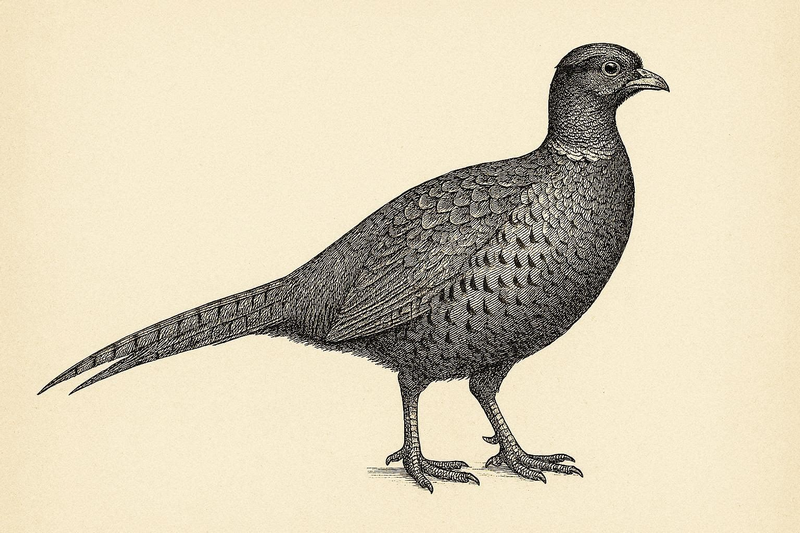
Pheasant
Nutritional information per 100 grams
Nutrition Facts
| Calories | Protein | Fat | Carbs | Sugar | Fiber |
|---|---|---|---|---|---|
| 174 | 30g | 4g | 0g | 0g | 0g |
Highlights
Coming soon
About This Meat
Pheasant is a lean, wild-type game bird with a protein-forward macronutrient profile and relatively low fat content, characteristic of animals that maintain high levels of physical activity in their natural environment. Its protein is complete and highly bioavailable, providing all essential amino acids in ratios that support muscle protein synthesis, immune protein production, and metabolic enzyme activity. The lower fat content of pheasant places it among the leaner animal protein sources, making it a protein-dense option with moderate caloric density. Pheasant is a good source of niacin, which functions as a coenzyme in oxidative phosphorylation and is required for the conversion of macronutrients into usable cellular energy. It provides vitamin B6, which is involved in amino acid transamination, neurotransmitter synthesis, and glycogen metabolism. Selenium is present and contributes to thyroid hormone activation and the antioxidant enzyme glutathione peroxidase. The iron in pheasant is in the heme form, offering superior bioavailability compared to plant iron sources and supporting erythropoiesis and systemic oxygen delivery. Zinc in pheasant supports immune surveillance, wound healing, and the regulation of gene expression through zinc-finger protein structures. Phosphorus contributes to both bone matrix integrity and the phosphorylation reactions central to energy metabolism. The lean, nutrient-dense nature of pheasant makes it a functionally efficient protein source that supports body composition maintenance and metabolic health without delivering excess caloric load.
Vitamins & Nutrients
- Cholesterol: 71mg (membrane bilayer stability, adrenal and gonadal hormone substrate, bile acid precursor)
- Sodium: 40mg (extracellular fluid balance, sodium-potassium pump activity, nerve impulse conduction)
- Potassium: 243mg (resting membrane potential maintenance, intracellular osmolarity, muscle contractility)
- Iron: 1.2mg (heme iron oxygen transport, cytochrome enzyme function, cellular respiration)
- Zinc: 1.1mg (metalloenzyme catalysis, immune system signaling, cellular proliferation)
- Selenium: 28mcg (selenocysteine-based enzyme activity, thyroid function, antioxidant cellular defense)
- Vitamin B12: 1.4mcg (cobalamin-dependent methionine synthesis, neuronal myelination, red blood cell production)
- Vitamin B6: 0.74mg (pyridoxal phosphate coenzyme activity, amino acid catabolism, glycogen phosphorylase support)
- Niacin (B3): 8.6mg (NAD and NADP biosynthesis, oxidative metabolism, DNA repair enzyme support)
- Riboflavin (B2): 0.1mg (FMN and FAD coenzyme synthesis, cellular energy flux, oxidative phosphorylation)
- Pantothenic Acid (B5): 1.6mg (acyl carrier protein function, steroid hormone synthesis, fatty acid beta-oxidation)
- Thiamin (B1): 0.1mg (thiamine pyrophosphate coenzyme role, pyruvate and alpha-ketoglutarate decarboxylation, neural energy metabolism)
- Phosphorus: 200mg (bone and dentin mineral content, nucleotide backbone structure, phosphocreatine energy storage)
- Magnesium: 22mg (ribosomal protein synthesis, muscle fiber relaxation, intracellular magnesium-ATP complex formation)
- Calcium: 12mg (intracellular signaling cascades, muscle excitation-contraction coupling, bone matrix deposition)
These values are approximate and can vary based on factors such as the specific cut of beef and cooking method.