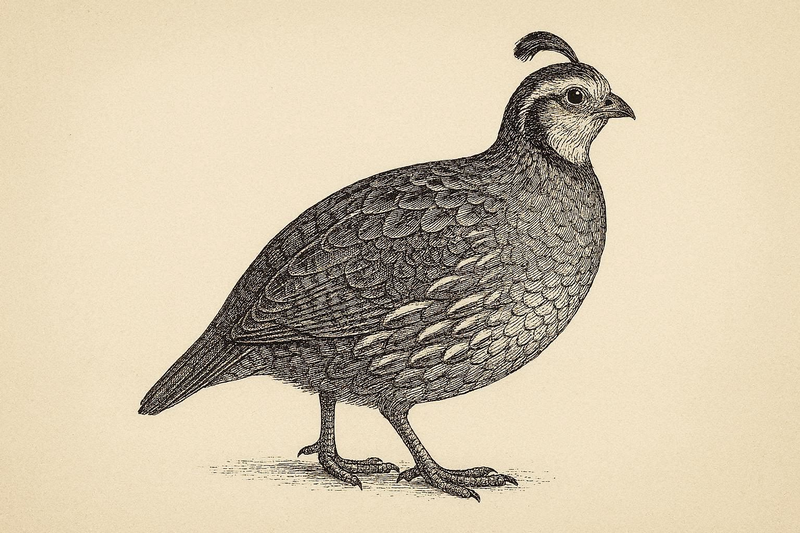
Quail
Nutritional information per 100 grams
Nutrition Facts
| Calories | Protein | Fat | Carbs | Sugar | Fiber |
|---|---|---|---|---|---|
| 174 | 24g | 8g | 0g | 0g | 0g |
Highlights
Coming soon
About This Meat
Quail is a small game bird that provides a concentrated source of complete protein with a relatively lean macronutrient profile, particularly in the breast muscle. The full spectrum of essential amino acids is present and supports muscle maintenance, immune function, and systemic protein turnover. Quail is notable for its micronutrient density relative to its caloric load, offering meaningful quantities of B vitamins, iron, and several trace minerals within a compact serving size. Iron is present in quail in both heme and non-heme forms, with the dark meat portions providing higher heme concentrations that support oxygen transport and cellular energy metabolism. Zinc is supplied at levels that contribute to immune regulation, protein synthesis, and enzymatic activity, though generally at lower concentrations than ruminant red meats. Vitamin B12 is present and supports neurological health, red blood cell maturation, and methylation cycle function. Niacin is found at notable levels in quail and supports NAD synthesis and mitochondrial energy pathways. Riboflavin contributes to FAD-dependent enzyme function and the catabolism of fatty acids and amino acids. Phosphorus is abundant in poultry muscle and bone-adjacent tissue, supporting ATP production and skeletal mineralization. Selenium is present and contributes to antioxidant enzyme systems, particularly glutathione peroxidase, and to thyroid hormone regulation. The fat content of quail is moderate, with a fatty acid composition that includes saturated, monounsaturated, and polyunsaturated fatty acids. Wild or pasture-raised quail may present a more favorable omega-3 to omega-6 ratio compared to conventionally raised birds due to dietary differences. Quail eggs, while distinct from the muscle meat, are a complementary source of fat-soluble vitamins, choline, and complete protein when consumed alongside the meat. The bioavailability of nutrients in quail is consistent with other animal-source foods and is unaffected by antinutritional factors. Quail represents a nutritionally efficient small bird protein that fits well into diverse animal-based dietary protocols.
Vitamins & Nutrients
- Cholesterol: 76mg (steroid and bile acid biosynthesis, cellular membrane fluidity, fat-soluble vitamin transport)
- Sodium: 53mg (extracellular fluid maintenance, action potential generation, electrolyte regulation)
- Potassium: 216mg (intracellular osmotic balance, cardiac conduction rhythm, skeletal muscle function)
- Iron: 4mg (superior heme iron content, oxygen transport via hemoglobin, myoglobin storage in red muscle tissue)
- Zinc: 2.4mg (T-cell immune signaling, enzymatic catalysis, DNA and RNA synthesis support)
- Selenium: 17mcg (selenoprotein production, antioxidant defense, thyroid hormone activation)
- Vitamin A: 73mcg (epithelial tissue maintenance, immune barrier function, visual phototransduction)
- Vitamin B12: 0.43mcg (red blood cell production, nervous system myelin support, nucleotide synthesis)
- Vitamin B6: 0.6mg (amino acid and neurotransmitter metabolism, glycogen utilization, heme biosynthesis)
- Niacin (B3): 7.5mg (NAD cofactor for over 400 enzymatic reactions, oxidative energy metabolism, cellular signaling)
- Riboflavin (B2): 0.26mg (flavoprotein oxidation, mitochondrial electron chain function, cellular growth)
- Thiamin (B1): 0.24mg (thiamine pyrophosphate cofactor, carbohydrate energy conversion, neuronal membrane support)
- Pantothenic Acid (B5): 0.77mg (coenzyme A precursor, steroid hormone synthesis, fatty acid oxidation)
- Folate: 8mcg (purine biosynthesis, DNA methylation, homocysteine metabolism)
- Magnesium: 23mg (enzyme activation, ATP stabilization, neuromuscular transmission)
- Phosphorus: 275mg (one of the highest among poultry, skeletal mineralization, intracellular energy signaling, membrane structure)
- Copper: 0.51mg (iron oxidation for transport, connective tissue synthesis, mitochondrial cytochrome c oxidase)
These values are approximate and can vary based on factors such as the specific cut of beef and cooking method.