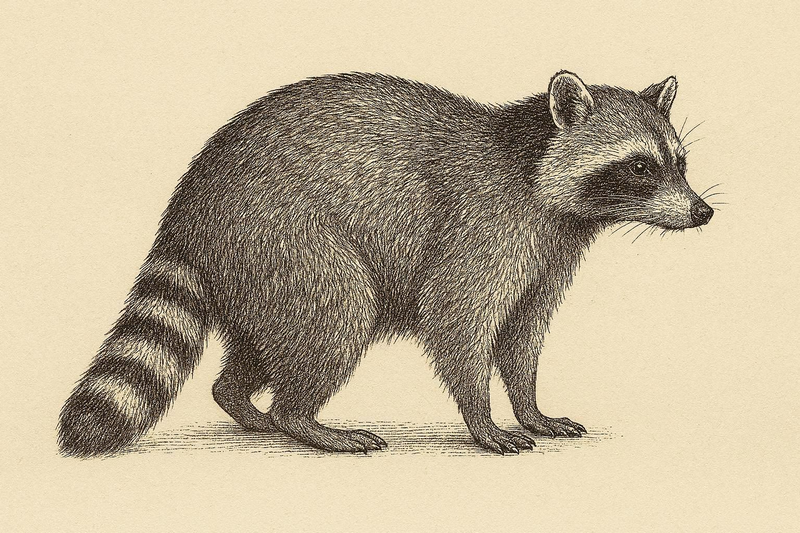
Racoon
Nutritional information per 100 grams
Nutrition Facts
| Calories | Protein | Fat | Carbs | Sugar | Fiber |
|---|---|---|---|---|---|
| 250 | 25g | 18g | 0g | 0g | 0g |
Highlights
Coming soon
About This Meat
Raccoon meat is a medium-fat wild game protein with a macronutrient profile that includes moderate to high fat depending on season and habitat, alongside a complete and substantial protein content. The fat composition of raccoon meat reflects its omnivorous diet and can include a higher proportion of polyunsaturated fatty acids, particularly linoleic acid, relative to exclusively herbivorous or ruminant species. Protein content supports muscle maintenance, immune function, and enzymatic processes through a full complement of essential amino acids. B12 is present in meaningful quantities for neurological maintenance and red blood cell synthesis. Niacin and riboflavin support NAD-dependent metabolic pathways central to cellular energy production. Heme iron availability supports oxygen-carrying capacity and is absorbed with significantly greater efficiency than non-heme iron. Zinc contributes to over 300 enzymatic reactions and is relevant to immune signaling and anabolic hormone production. Raccoon fat can serve as a concentrated energy substrate for individuals utilizing fat as a primary metabolic fuel. Selenium provides antioxidant protection through selenoprotein activity, including thioredoxin reductase and glutathione peroxidase. The connective tissue and collagen content from whole-animal preparation supports joint integrity, gut lining health, and skin structure. Phosphorus and potassium are present at levels consistent with other mid-sized wild game animals. Raccoon has been a traditional food source in North American indigenous and rural contexts for generations. Its seasonal fat accumulation prior to winter makes late-harvest raccoon particularly energy-dense. As a whole animal protein source, raccoon supports the full spectrum of nutritional priorities relevant to metabolic health and carnivore dietary frameworks.
Vitamins & Nutrients
- Cholesterol: 100mg (steroid hormone biosynthesis, bile emulsification, cell membrane fluidity)
- Sodium: 79mg (extracellular fluid balance, nerve conduction velocity, muscle activation)
- Potassium: 398mg (cardiovascular electrical activity, intracellular osmolarity, renal function)
- Iron: 7.1mg (hemoglobin oxygen binding, myoglobin muscle oxygen storage, cytochrome activity)
- Zinc: 2.3mg (enzymatic co-factor function, immune proliferation, testosterone biosynthesis)
- Copper: 0.19mg (ceruloplasmin activity, iron oxidation state regulation, collagen synthesis)
- Selenium: 18mcg (glutathione recycling, thyroidal deiodinase activity, DNA repair support)
- Magnesium: 30mg (glycolytic enzyme activation, neuromuscular transmission, bone mineral deposition)
- Phosphorus: 261mg (ATP synthesis, skeletal structure, intracellular buffer function)
- Calcium: 14mg (muscle contraction triggering, synaptic neurotransmitter release, bone formation)
- Vitamin B1 (Thiamin): 0.59mg (thiamine pyrophosphate coenzyme function, energy substrate oxidation)
- Vitamin B2 (Riboflavin): 0.52mg (FAD and FMN coenzyme production, oxidative phosphorylation support)
- Niacin (B3): 4.7mg (NAD and NADP synthesis, cellular energy transfer, genomic stability)
- Vitamin B6: 0.47mg (transamination, serotonin and dopamine precursor synthesis)
- Vitamin B12: 8.3mcg (neuronal myelination, methionine recycling, mitochondrial energy metabolism)
- Folate: 11mcg (nucleotide biosynthesis, methylation reactions, cellular proliferation)
- Vitamin E: 0.49mg (lipid peroxidation inhibition, fat-soluble antioxidant activity)
- Vitamin K: 1.7mcg (gamma-carboxylation of clotting proteins, bone matrix protein activation)
These values are approximate and can vary based on factors such as the specific cut of beef and cooking method.