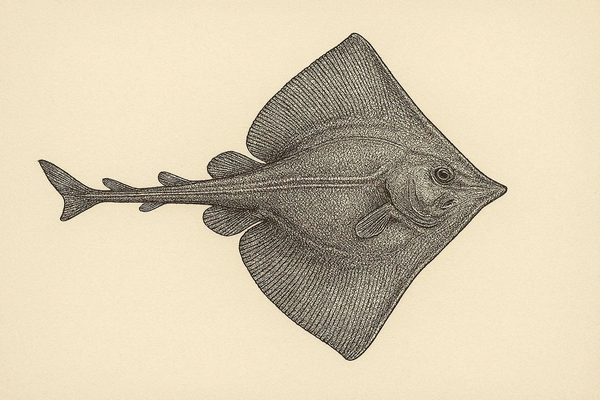
Skate
Nutritional information per 100 grams
Nutrition Facts
| Calories | Protein | Fat | Carbs | Sugar | Fiber |
|---|---|---|---|---|---|
| 95 | 19g | 1g | 0g | 0g | 0g |
Highlights
Coming soon
About This Meat
Skate is a cartilaginous fish in the ray family that provides a lean to moderately fatty protein source with a complete amino acid profile suited to muscle maintenance and anabolic recovery. Its protein content is high relative to its caloric load, making it an efficient source of dietary nitrogen for individuals focused on body composition and metabolic health. Skate contains notable levels of omega-3 fatty acids, including EPA and DHA, which are critical for neurological integrity, cardiovascular function, and the regulation of systemic inflammatory signaling. It is a meaningful source of B12, contributing to nerve conduction, DNA synthesis, and red blood cell formation. Skate provides iodine, a mineral essential for thyroid hormone synthesis and basal metabolic rate regulation. Selenium is present and supports antioxidant defense systems as well as thyroid peroxidase activity. Phosphorus found in skate contributes to skeletal mineralization and energy currency production through phosphorylation reactions. The meat contains fat-soluble nutrients that become bioavailable with the naturally occurring fats in the tissue, requiring no added dietary fat for absorption. Skate wings, the most commonly consumed portion, are predominantly lean muscle tissue with a low connective tissue ratio, supporting efficient protein digestion and absorption. The overall nutrient density of skate makes it a viable protein anchor in a carnivore or animal-based dietary framework. Its mineral composition, particularly in relation to electrolyte balance and enzymatic cofactor supply, provides broad physiological support.
Vitamins & Nutrients
- Cholesterol: 50mg (steroid hormone synthesis, cellular membrane structure, bile acid production)
- Sodium: 95mg (fluid balance, nerve impulse conduction, muscle contraction regulation)
- Potassium: 280mg (electrolyte balance, cardiovascular function, cellular fluid regulation)
- Phosphorus: 190mg (bone mineral structure, ATP energy production, cellular signaling)
- Magnesium: 35mg (muscle and nerve function, ATP synthesis, enzymatic activation)
- Calcium: 30mg (skeletal structure support, nerve transmission, muscle contraction)
- Iron: 0.5mg (oxygen transport, hemoglobin production, metabolic energy support)
- Zinc: 0.4mg (immune defense, tissue repair, enzymatic function)
- Selenium: 30mcg (antioxidant enzyme support, thyroid hormone metabolism, oxidative stress regulation)
- Vitamin B12: 2.5mcg (neurological function, DNA synthesis, red blood cell formation)
- Vitamin B6: 0.3mg (protein and amino acid metabolism, neurotransmitter production)
- Niacin (B3): 2.5mg (cellular energy metabolism, NAD coenzyme production, nervous system support)
- Riboflavin (B2): 0.08mg (energy production, cellular growth, cofactor activity)
- Pantothenic Acid (B5): 0.5mg (fat metabolism, coenzyme A synthesis, adrenal hormone support)
- Thiamin (B1): 0.05mg (carbohydrate metabolism, nervous system function, energy processing)
- Vitamin D: 0.5mcg (calcium absorption, bone metabolism, immune modulation)
- Copper: 0.03mg (iron utilization, connective tissue formation, antioxidant enzyme activity)
- Folate: 5mcg (DNA replication, cell division, red blood cell support)
These values are approximate and can vary based on factors such as the specific cut of beef and cooking method.