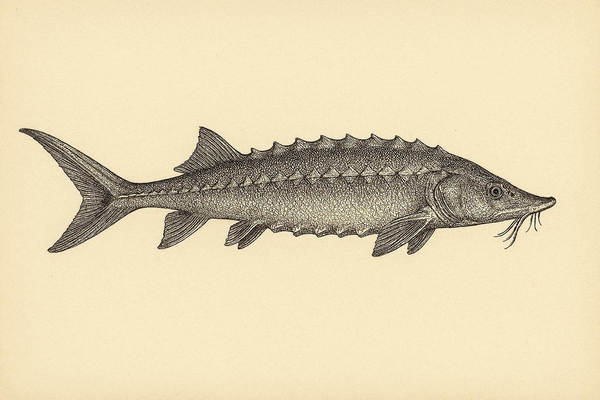
Sturgeon
Nutritional information per 100 grams
Nutrition Facts
| Calories | Protein | Fat | Carbs | Sugar | Fiber |
|---|---|---|---|---|---|
| 105 | 20g | 3g | 0g | 0g | 0g |
Highlights
Coming soon
About This Meat
Sturgeon is a large, ancient fish species prized in carnivore and nutrient-dense dietary contexts for its rich fat content, complete protein profile, and extraordinary micronutrient density. The flesh is notably higher in fat than most white fish, providing a significant supply of omega-3 fatty acids including EPA and DHA, which support neurological function, cellular membrane structure, and systemic inflammatory balance. Sturgeon roe, often consumed alongside the flesh, delivers one of the highest concentrations of omega-3 fatty acids, phosphatidylcholine, and fat-soluble vitamins found in any food source. The protein in sturgeon meat provides all essential amino acids necessary for anabolic processes, tissue maintenance, and enzymatic function. Vitamin D is found in the fatty tissue and supports calcium metabolism, immune regulation, and genomic transcription activity. B12 content is high and bioavailable, supporting methylation, neurological integrity, and hematopoietic function. Sturgeon is a significant source of phosphorus, contributing to skeletal mineralization and ATP synthesis. Selenium is present at functional levels and participates in glutathione peroxidase activity, protecting cells from oxidative damage. Potassium and magnesium support electrolyte balance, cardiac contractility, and muscle function across diverse physiological demands. The caloric density of sturgeon, driven by its fat content, makes it particularly suitable for individuals on ketogenic or high-fat carnivore protocols where energy sufficiency and fat-soluble nutrient delivery are prioritized. The overall nutrient profile of sturgeon positions it as one of the more complete single-food sources available within an animal-based dietary framework.
Vitamins & Nutrients
- Cholesterol: 60mg (steroid hormone synthesis, cellular membrane structure, bile acid production)
- Sodium: 54mg (fluid balance, nerve impulse transmission, muscle contraction regulation)
- Potassium: 284mg (electrolyte balance, cardiovascular rhythm, muscular function)
- Phosphorus: 211mg (bone and tooth structure, ATP energy production, cellular repair)
- Magnesium: 42mg (muscle and nerve function, ATP synthesis, enzymatic cofactor activity)
- Calcium: 13mg (skeletal support, nerve transmission, smooth muscle function)
- Iron: 0.7mg (oxygen transport, hemoglobin production, metabolic energy)
- Zinc: 0.5mg (immune system function, tissue repair, enzymatic activity)
- Selenium: 16mcg (antioxidant enzyme support, thyroid hormone metabolism, oxidative defense)
- Vitamin A: 210mcg (visual system integrity, epithelial tissue support, immune activation)
- Vitamin D: 10.3mcg (calcium absorption, bone metabolism, immune system modulation)
- Vitamin B12: 1.5mcg (neurological function, DNA synthesis, red blood cell formation)
- Vitamin B6: 0.2mg (amino acid metabolism, neurotransmitter production)
- Niacin (B3): 10mg (NAD coenzyme production, cellular energy metabolism, nervous system support)
- Pantothenic Acid (B5): 1mg (fatty acid metabolism, coenzyme A synthesis, hormone production)
- Riboflavin (B2): 0.09mg (energy production, cellular growth, electron transport support)
- Thiamin (B1): 0.09mg (carbohydrate metabolism, nerve function, energy processing)
- Folate: 15mcg (DNA replication, cell division, red blood cell maturation)
- Choline: 87mg (cellular membrane integrity, neurotransmitter synthesis, liver fat transport)
- Copper: 0.05mg (iron utilization, connective tissue formation, antioxidant enzyme support)
These values are approximate and can vary based on factors such as the specific cut of beef and cooking method.