Tuna
Nutritional information per 100 grams
Nutrition Facts
| Calories | Protein | Fat | Carbs | Sugar | Fiber |
|---|---|---|---|---|---|
| 184 | 29g | 6g | 0g | 0g | 0g |
Highlights
Coming soon
About This Meat
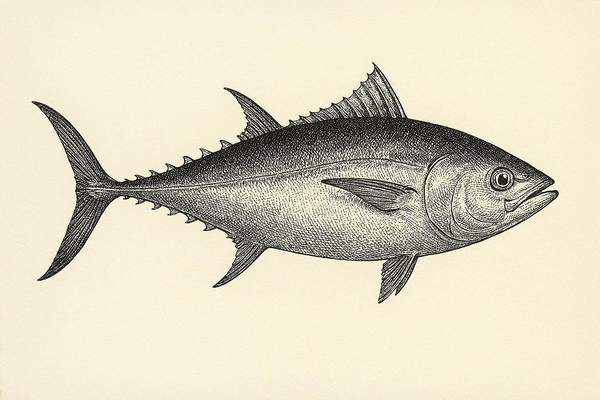
Tuna is one of the most recognized and widely consumed high-protein fish in the world, and it occupies a central role in animal-based and carnivore dietary frameworks due to its exceptional protein density and broad micronutrient profile. The protein content is among the highest of any fish, with lean species like skipjack providing protein concentrations comparable to chicken breast, and it is complete across all essential amino acids. Omega-3 fatty acid content varies by species, with bluefin tuna delivering substantially higher EPA and DHA concentrations compared to leaner skipjack or albacore, providing neurological and cardiovascular support. B12 is present in high amounts and supports methylation, neurological health, and erythrocyte formation. Niacin content in tuna is exceptional, often exceeding 100 percent of daily targets in a single serving, and supports NAD+ biosynthesis, which is central to cellular energy metabolism and mitochondrial function. Selenium is highly concentrated in tuna and directly supports thyroid hormone metabolism, antioxidant enzyme activity, and DNA repair processes. Phosphorus contributes to ATP synthesis and skeletal mineralization. Potassium supports fluid balance and cardiac conduction. Vitamin D is present in the fatty tissue of fattier tuna species and contributes to immune regulation and calcium homeostasis. The magnesium content, while moderate, supports hundreds of enzymatic reactions including those governing protein synthesis and glycolysis. As a large predatory fish, certain tuna species carry elevated methylmercury levels, which is a relevant consideration for consumption frequency. Within an animal-based dietary context, tuna represents one of the most efficient protein delivery mechanisms available from a whole food source.
Vitamins & Nutrients
- Cholesterol: 45mg (hormone synthesis, cellular membrane structure, bile acid production)
- Sodium: 45mg (fluid balance, nerve impulse transmission, muscle contraction regulation)
- Potassium: 441mg (electrolyte regulation, cardiovascular support, cellular fluid balance)
- Phosphorus: 278mg (bone mineral matrix, ATP energy production, cellular signaling)
- Magnesium: 35mg (muscle and nerve function, ATP synthesis, enzymatic activation)
- Calcium: 4mg (skeletal support, nerve signal transmission, smooth muscle contraction)
- Iron: 0.8mg (oxygen transport via hemoglobin, red blood cell production, metabolic energy)
- Zinc: 0.4mg (immune defense, tissue repair, enzymatic function)
- Selenium: 91mcg (antioxidant enzyme activation, thyroid hormone metabolism, oxidative cellular protection)
- Vitamin A: 18mcg (visual system support, epithelial tissue integrity, immune activation)
- Vitamin D: 1.7mcg (calcium absorption regulation, bone metabolism, immune modulation)
- Vitamin E: 0.2mg (lipid membrane antioxidant protection, cellular stability)
- Vitamin B12: 2.1mcg (neurological function, DNA synthesis, red blood cell formation)
- Vitamin B6: 0.93mg (protein and amino acid metabolism, neurotransmitter biosynthesis)
- Niacin (B3): 18mg (cellular NAD production, energy metabolism, nervous system support)
- Pantothenic Acid (B5): 0.3mg (fatty acid metabolism, coenzyme A synthesis, hormone production)
- Riboflavin (B2): 0.12mg (energy production, cellular growth, electron transport support)
- Thiamin (B1): 0.12mg (carbohydrate metabolism, nerve function, ATP generation)
- Choline: 65mg (cellular membrane integrity, neurotransmitter synthesis, liver fat metabolism)
- Folate: 2mcg (DNA synthesis, cell division, red blood cell maturation)
- Copper: 0.04mg (iron utilization, connective tissue formation, antioxidant enzyme support)
These values are approximate and can vary based on factors such as the specific cut of beef and cooking method.