Whiting
Nutritional information per 100 grams
Nutrition Facts
| Calories | Protein | Fat | Carbs | Sugar | Fiber |
|---|---|---|---|---|---|
| 90 | 19g | 1g | 0g | 0g | 0g |
Highlights
Coming soon
About This Meat
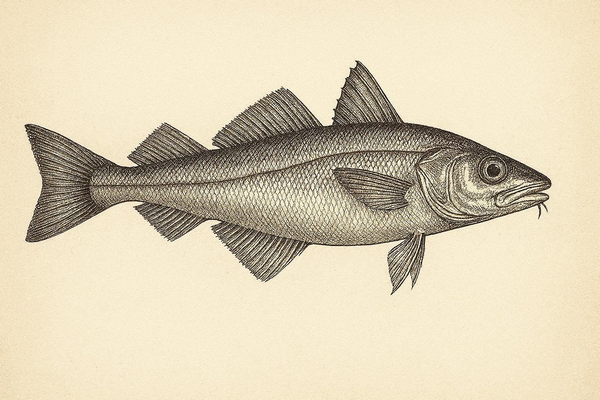
Whiting is a lean, white-fleshed marine fish that provides a high-quality complete protein source with a relatively low fat content compared to fattier fish species. Its protein is rich in essential amino acids, supporting muscle protein synthesis, tissue repair, and nitrogen balance. Whiting contains meaningful amounts of vitamin B12, which is critical for red blood cell formation, neurological integrity, and DNA synthesis. It supplies selenium, a trace mineral that functions as a cofactor in antioxidant enzyme systems and supports thyroid hormone metabolism. Iodine is present in measurable quantities, directly supporting thyroid function and the regulation of basal metabolic rate. Whiting provides phosphorus, which plays a central role in ATP production, bone mineralization, and cellular membrane structure. The fish delivers niacin and vitamin B6, both involved in energy metabolism and the conversion of macronutrients into usable fuel. Its lean protein profile makes it highly satiating relative to its caloric load, supporting body composition and appetite regulation. The bioavailability of animal-sourced protein in whiting is superior to plant-based alternatives, with a highly digestible amino acid profile. Whiting also contributes omega-3 fatty acids, particularly EPA and DHA, which support membrane fluidity, cardiovascular function, and systemic inflammation regulation. Zinc is present in modest amounts, supporting enzymatic function, immune competence, and cellular repair. As a whole food protein source, whiting integrates well into a carnivore dietary framework focused on nutrient density and metabolic efficiency.
Vitamins & Nutrients
- Cholesterol: 84mg (supports hormone production, cellular membrane integrity, and steroid synthesis)
- Sodium: 132mg (helps maintain fluid balance, nerve signal transmission, and muscle contraction)
- Potassium: 434mg (supports electrolyte balance, cardiovascular function, and muscular contraction)
- Phosphorus: 285mg (involved in ATP production, bone mineralization, and cellular repair)
- Magnesium: 21mg (contributes to muscle function, nervous system regulation, and ATP synthesis)
- Calcium: 62mg (helps maintain bone structure, nerve signaling, and muscle contractile activity)
- Iron: 0.4mg (supports oxygen transport in red blood cells and metabolic energy production)
- Zinc: 0.5mg (involved in immune signaling, enzyme activity, and tissue repair)
- Selenium: 28mcg (contributes to thyroid hormone metabolism and antioxidant enzyme activity)
- Vitamin B12: 2.6mcg (supports neurological function, DNA synthesis, and red blood cell formation)
- Vitamin B6: 0.2mg (involved in protein metabolism and neurotransmitter production)
- Niacin (B3): 1.7mg (supports cellular energy metabolism and nervous system function)
- Riboflavin (B2): 0.06mg (contributes to energy production and cellular growth processes)
- Pantothenic Acid (B5): 0.25mg (involved in fat metabolism and hormone synthesis)
- Thiamin (B1): 0.07mg (supports carbohydrate metabolism and nervous system function)
- Vitamin D: 1.8mcg (contributes to calcium absorption, bone maintenance, and immune regulation)
- Vitamin A: 38mcg (supports visual function, epithelial integrity, and immune signaling)
- Vitamin E: 0.38mg (involved in antioxidant protection and cellular membrane integrity)
- Choline: 83mg (supports liver function, cellular membrane structure, and neurotransmitter synthesis)
- Omega-3 Fatty Acids (EPA/DHA): 0.3g (help maintain cardiovascular and neurological function)
These values are approximate and can vary based on factors such as the specific cut of beef and cooking method.